
By Pranesh Das Purandaradoss
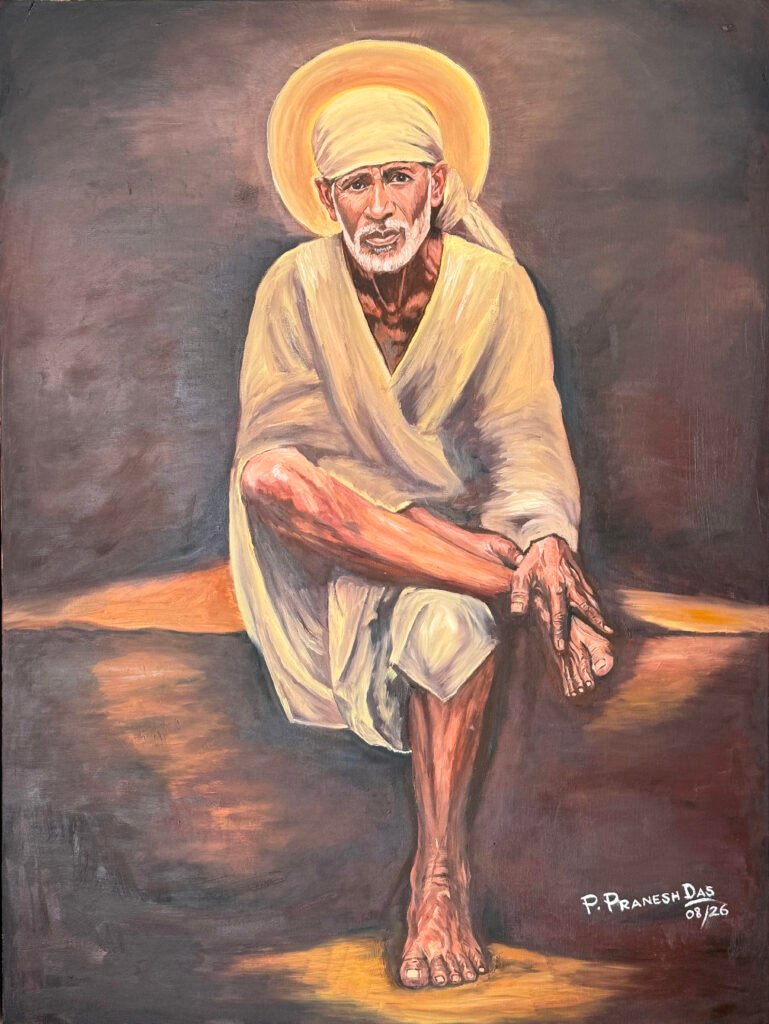
Some paintings are created to commemorate achievement. Others are created to honor history. Occasionally, an artwork emerges from a place of devotion and reflection. My painting of Shirdi Sai Baba belongs to the latter.
As a classical realist painter, I am deeply inspired by subjects that embody wisdom, compassion, and humanity. Throughout my artistic journey, I have sought to create works that communicate more than visual likeness. I strive to create paintings that invite contemplation and connect viewers to something deeper within themselves.
My portrait of Sai Baba was born from this intention.
A Spiritual Inspiration
Sai Baba’s message of faith, humility, service, and universal love has inspired millions of people across generations. His teachings transcend religious boundaries and emphasize values that remain relevant in today’s world: compassion, patience, generosity, and devotion to the welfare of others.
While approaching this painting, I reflected on how art can become a form of meditation. Every stage of the process required patience, concentration, and respect for the subject. Rather than simply replicating a photograph, I sought to capture the serenity and spiritual presence that devotees often associate with Sai Baba.
The Artistic Process
My training in Florence, Italy, has given me a deep appreciation for traditional methods of portraiture. Renaissance artists believed that careful observation and disciplined craftsmanship could reveal profound truths about their subjects.
This philosophy guided my approach to painting Sai Baba.
Through careful drawing, value studies, and layered paint application, I worked to create a portrait that conveyed calmness, wisdom, and grace. The subtle transitions of light and shadow were particularly important in creating a sense of depth and quiet contemplation.
Every brushstroke became an opportunity to slow down, observe more deeply, and engage with the spiritual significance of the work.
Art as a Form of Devotion
For many artists throughout history, painting sacred subjects has been more than a technical exercise. It has been an act of reverence.
Creating this portrait reminded me that art has the power to inspire reflection and connection. A spiritual painting can serve as a visual reminder of values that help guide our daily lives. It can encourage moments of stillness amid the constant movement of the modern world.
In that sense, the completed portrait represents much more than paint on canvas. It reflects a personal journey of dedication, learning, and appreciation for the spiritual teachings that continue to inspire countless individuals.
Preserving Sacred Traditions Through Art
Classical realism has long been used to depict religious and spiritual figures. By combining traditional techniques with contemporary craftsmanship, artists can help preserve sacred stories and teachings for future generations.
My goal with this painting was to contribute, in a small way, to that enduring tradition. I wanted to create an image that would invite viewers to pause, reflect, and experience a sense of peace.
Whether viewed as a work of fine art, a devotional image, or a personal tribute, the painting serves as an expression of faith and gratitude.
Reflections
Creating this portrait of Sai Baba was a meaningful and rewarding experience. It reinforced my belief that art possesses a unique ability to touch both the mind and the spirit.
As I continue my journey as an artist, I remain grateful for opportunities to create works that celebrate beauty, wisdom, and the shared human search for meaning.
Sai Baba’s message of love, faith, and service continues to inspire millions around the world. Through this painting, I sought to honor that legacy and express my own appreciation for the timeless values he represents.